
Two exceptional new teas have just arrived directly from the gardens of Darjeeling: Gopaldhara First Flush Wonder Tea DJ5/2025 and Organic Seeyok First Flush FTGFOP1 ch DJ5/2025. These are both Darjeeling first flush teas, made from the very first plucking of delicate new leaves and buds that emerge after the winter dormancy period. In this article, we’ll explore the meaning behind the names of Darjeeling first flush teas, break down each element and explain why these detailed labels are so important to tea connoisseurs and producers alike.

Darjeeling is a relatively small tea-growing region in the Indian Himalayas, but its landscape is anything but simple. Made up of steep valleys, winding mountain roads, and high peaks, the area’s geography and terroir play a major role in shaping the flavour of its teas. Though the gardens may seem close together on a map, travelling from one estate to another can often take hours due to the hilly terrain and narrow roads.
Depending on how you count active, merged, or recently revived estates, Darjeeling is home to around 80 – 90 tea gardens. Each garden has its own microclimate, altitude levels, and style of cultivation, all of which contribute to the unique character of its teas.
The names of the gardens reflect the rich mix of cultural influences in the area, from Lepcha and Nepali to Tibetan and British. Some estates were named after their founders or early managers, such as Glenburn or Steinthal, while others draw on local languages or geographical features, like Gopaldhara or Seeyok.
In the name of a Darjeeling first flush tea the first thing you will see is the area it came from “Darjeeling” and then the name of the garden, e.g. “Gophaldara” or “Seeyok”.


This tea comes from the Gopaldhara Tea Estate. Situated high in the Darjeeling hills, its claim to fame is that it has managed to grow tea bushes at the highest altitude in Darjeeling, something the British, who originally founded the estate, could not succeed in. Here’s what the rest of the name tells you:
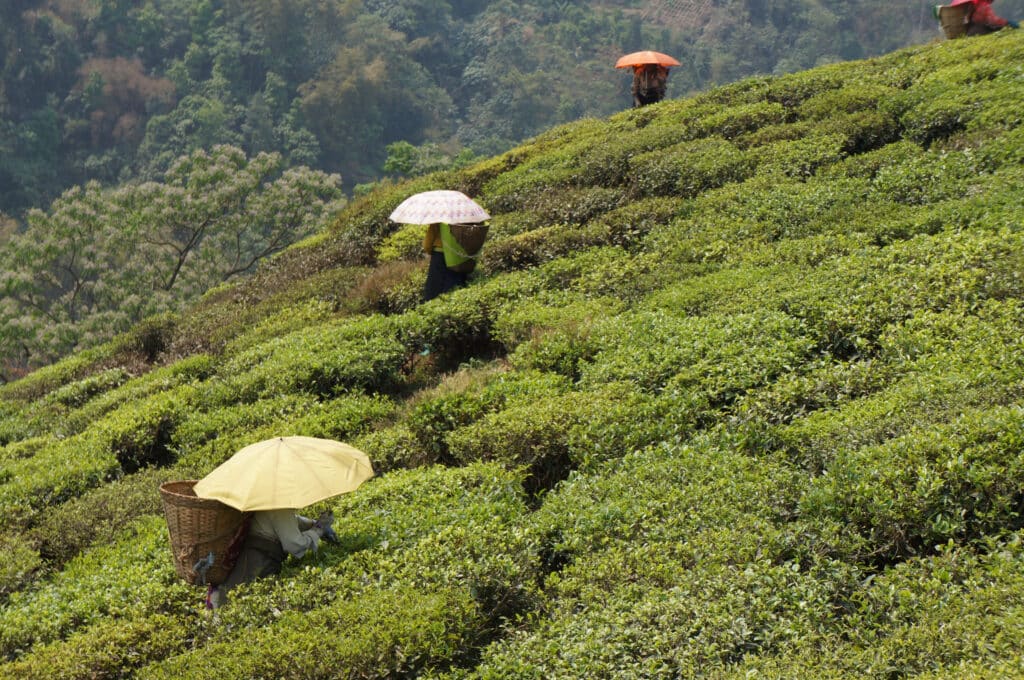


This tea is from Seeyok Tea Estate, a privately owned organic-certified garden in the Mirik Valley. Here’s how to read the name:
Tea grading terms like SFTGFOP1 might look like alphabet soup at first, but each letter (and number!) reveals something about the style and quality of the tea, especially when it comes to Darjeeling. These grades are mostly used for whole leaf teas and help give you a sense of how the tea was picked and processed.
Then there’s the “1”—this simply means it’s the highest grade within that category. So SFTGFOP1 would be considered a finer selection than a regular SFTGFOP.
Teas from Darjeeling, especially first flush teas, are highly prized, and simply having “Darjeeling” on the label can increase a tea’s value. In the past, teas from other regions were sometimes blended with those from Darjeeling and sold under the same name – a practice that led to confusion, inconsistency and disappointment from consumers. Today, however, Darjeeling is recognised as a Protected Geographical Indication (PGI), and regulations around its use are much more strictly enforced.

The names of Darjeeling First Flush teas carry important information: they tell you which garden the tea comes from, when it was harvested, and how it was graded. For tea connoisseurs and professionals, these details matter. Many know which gardens consistently produce the finest teas, year after year. And for anyone curious about what they’re drinking, these names help distinguish one small batch from another during a short harvest season, where each lot can have its own unique character. Now, when you see a tea labelled SFTGFOP1 CH, you’ll know you’re looking at a Special Fine Tippy Golden Flowery Orange Pekoe, Grade 1, made from heritage China bushes.
| Cookie | Duration | Description |
|---|---|---|
| __stripe_mid | 1 year | This cookie is used by our payment provider Stripe to process payments. |
| __stripe_sid | 30 minutes | This cookie is used by our payment provider Stripe to process payments. |
| cookielawinfo-checkbox-analytics | 1 year | The cookies is used to store the user consent for the cookies in the category “Analytics”. |
| cookielawinfo-checkbox-necessary | 1 year | The cookies is used to store the user consent for the cookies in the category “Necessary“. |
| CookieLawInfoConsent | 1 year | This cookie is used to record the default button state of the corresponding category. |
| viewed_cookie_policy | 1 year | The cookie is used to store whether or not user has consented to the use of cookies. |
| woocommerce_cart_hash | session | This cookies is used to determine when cart contents/data changes. |
| woocommerce_items_in_cart | session | This cookie is used to determine when cart contents/data changes. |
| wp_woocommerce_session_* | 2 days | This cookie is used to find the cart data in the database for each customer. |
| Cookie | Duration | Description |
|---|---|---|
| _ga | 2 years | This cookie is used by Google Analytics to calculate visitor, session and campaign data for the sites analytics reports. |
| _ga_* | 2 years | This cookie is used by Google Analytics to calculate visitor, session and campaign data for the sites analytics reports. |

Call us during opening hours on + 49 (0) 711 518 74 006 or email us using the form below. We will get back to you as soon as we can.