
Genmaicha is a traditional Japanese green tea blended with roasted brown rice. During the roasting process, much like popcorn, some of the rice grains pop, giving the tea a distinctive look and earning it the affectionate nickname “popcorn tea.” These popped grains not only add visual appeal to the tea but but also contribute to the tea’s warm, toasty aroma and nutty flavour.
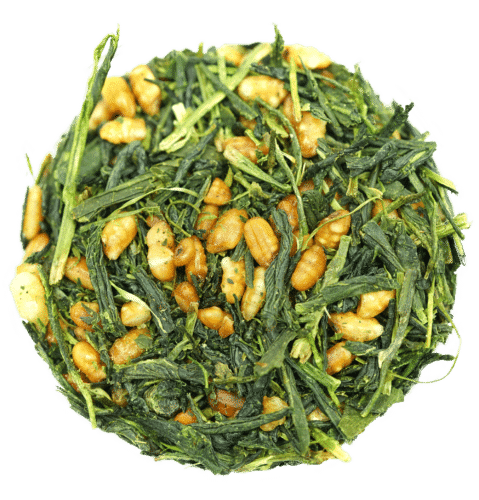
The saying “necessity is the mother of invention” applies perfectly to the origins of genmaicha. In 15th-century Japan, during times of economic hardship, resourceful tea vendors began mixing roasted rice with green tea to stretch their limited supply. At a time when both tea and rice were precious commodities, this simple yet clever solution made tea more accessible to the general population. Today, this simple blend of tea and rice has evolved from a humble necessity into a beloved choice among tea enthusiasts, prized for its distinctive flavour and versatility – especially as a companion to food.
Genmaicha is known for its mellow flavour. The typical vegetal, slightly grassy notes of Japanese green tea are softened by the warm, nutty sweetness of roasted rice, which adds a gentle, toasty finish. The result is a smooth, well-rounded infusion with noticeably less bitterness than many other Japanese green teas, making it an excellent choice for those new to green tea or anyone seeking a more soothing, easy-to prepare and enjoy cup of tea.
Compared to other green teas, genmaicha contains lower levels of caffeine. This makes it a calming option for later in the day or for individuals sensitive to caffeine.
Like other green teas, genmaicha contains antioxidants, especially catechins, which may contribute to heart health, metabolism, and general wellbeing. The roasted rice, while not significantly nutritional on its own, adds a comforting element that’s easy on the stomach.
Genmaicha’s unique flavour profile makes it particularly food-friendly. Its nutty and savoury character acts as a natural complement to a variety of dishes, especially those with subtle, clean flavours. The specialist Japanese artisanal food website Kokoro Care has several suggestions on how to pair genmaicha with food, and in addition to sushi and Japanese food in general, recommends enjoying it with tradational savoury rice crackers (Osenbi).
The character of genmaicha varies depending on the type and quality of green tea and rice used in the blend. While it was traditionally made using bancha (a coarser, more mature green tea), modern genmaicha often features sencha or kabusecha for a more complex, refined flavour. One variety even known as “matcha-iri genmaicha”, includes matcha which adds a vibrant green colour and a more intense umami depth, especially on the first infusion.
The quality of genmaicha can range from simple blends using factory produced roasted rice and bancha to high-end, handcrafted versions such as the organic Watanabe genmaicha where the rice is roasted and mixed in with the tea by the tea farmer himself. Factors such as the origin of the tea leaves, the type of rice, and the roasting technique all influence the final result. Higher-quality genmaicha will typically have a more balanced taste and a fresher, cleaner finish.
| Cookie | Duration | Description |
|---|---|---|
| __stripe_mid | 1 year | This cookie is used by our payment provider Stripe to process payments. |
| __stripe_sid | 30 minutes | This cookie is used by our payment provider Stripe to process payments. |
| cookielawinfo-checkbox-analytics | 1 year | The cookies is used to store the user consent for the cookies in the category “Analytics”. |
| cookielawinfo-checkbox-necessary | 1 year | The cookies is used to store the user consent for the cookies in the category “Necessary“. |
| CookieLawInfoConsent | 1 year | This cookie is used to record the default button state of the corresponding category. |
| viewed_cookie_policy | 1 year | The cookie is used to store whether or not user has consented to the use of cookies. |
| woocommerce_cart_hash | session | This cookies is used to determine when cart contents/data changes. |
| woocommerce_items_in_cart | session | This cookie is used to determine when cart contents/data changes. |
| wp_woocommerce_session_* | 2 days | This cookie is used to find the cart data in the database for each customer. |
| Cookie | Duration | Description |
|---|---|---|
| _ga | 2 years | This cookie is used by Google Analytics to calculate visitor, session and campaign data for the sites analytics reports. |
| _ga_* | 2 years | This cookie is used by Google Analytics to calculate visitor, session and campaign data for the sites analytics reports. |

Call us during opening hours on + 49 (0) 711 518 74 006 or email us using the form below. We will get back to you as soon as we can.