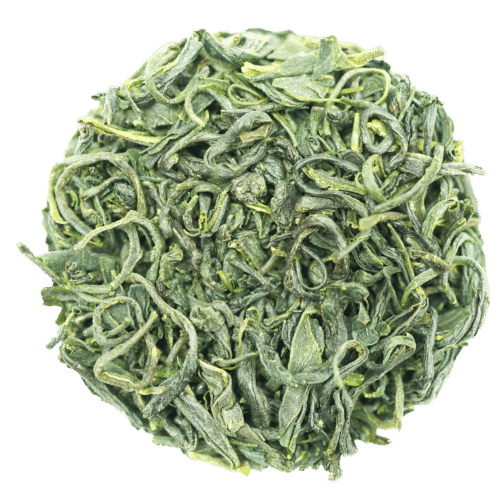

While catechins can make a tea taste bitter, this surprising tea has an unusually floral scent when you first open the packet, reminiscent of an oolong. The taste is also surprising for a Japanese green tea, sweet and floral, with lots of umami.
Green tea is said to be healthy because it contains anti-oxidative and anti-allergic catechines. This Benifuuki number 1 (the first picking of the year) has an exceptionally high content of both of these, in particular 3MeEGCg3.
While catechins can make a tea taste bitter, this surprising tea has an unusually floral scent when you first open the packet, reminiscent of an oolong. The taste is also surprising for a Japanese green tea, sweet and floral, with lots of umami.
Benifuuki green tea comes in both loose leaf and powder form.
Benifuuki No.1 is a loose leaf tea, floral and fragrant, almost like an oolong. Benifuuki number 1 is high in L-theanine (the relaxing component in tea) and has a moderate amount of caffeine, making it an excellent choice for those who enjoy the complex flavour profiles of Japanese green tea but want slightly less vegetal notes.
Benifuuki No.2: A loose leaf tea, more bitter and vegetal than Benifuuki number 1, Benifuuki number 2 tea has the highest content of EGCG3 and caffeine, making it the healthiest version and ideal during the allergy season.
Benifuuki Powder: A blend of Benifuuki teas, Benifuuki powder has a rich, full flavour. It can be whisked in a bowl like matcha, prepared as a latte or added to desserts, smoothies, yoghurt, or even your breakfast cereal. To avoid bitterness or clumps, sift the powder first or blend with a little water to form a paste.
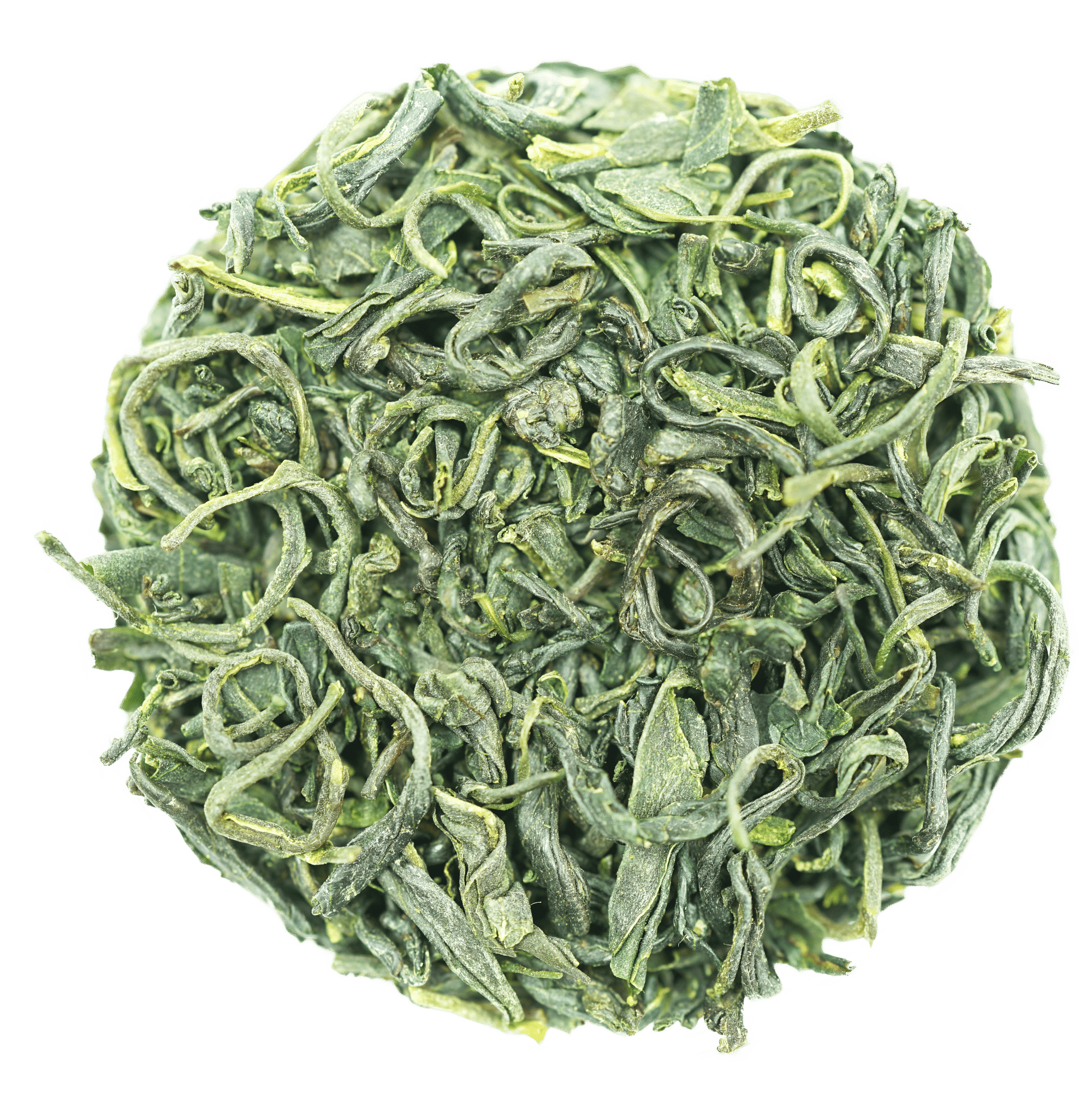
Working in cooperation with the Kagoshima Tea Research Institute, the producers of this unique tea spent years optimising methods of tea cultivation, harvest and production. In doing so they placed particular focus on the Benifuuki cultivar of the tea plant, which was already known for its health benefits. After a short oxidation period in the dark at low temperature, for this tea they developed a new method of stopping oxidation: instead of the normal short “Asamushi”, medium “Chumushi or longer “Fukamushi” steaming at 100°C, the steaming “kill green” step of production was carried out in a special machine that could raise the temperature to around 300°C. This more efficient way of de-enzyming the tea uses less steam which results in a more intense aroma and a beautiful dark green dry leaf.
We love Benifuuki No. 1. Not just because it is something different and super healthy but also because it tastes great over four infusions.
For more information on the cultivar Benifuuki and how it might be able to help allergy sufferers in the hay-fever season, see our article “Benifuuki green tea: Could it be a solution for hay-fever sufferers?” in our online magazine.
 DE-ÖKO-006
Non-EU Agriculture
DE-ÖKO-006
Non-EU Agriculture
From controlled organic cultivation
Organic green tea
DE-ÖKO-006
Non-EU Agriculture
From controlled organic cultivation
hover to zoom, click on magnifier for full view
| Cookie | Duration | Description |
|---|---|---|
| __stripe_mid | 1 year | This cookie is used by our payment provider Stripe to process payments. |
| __stripe_sid | 30 minutes | This cookie is used by our payment provider Stripe to process payments. |
| cookielawinfo-checkbox-analytics | 1 year | The cookies is used to store the user consent for the cookies in the category “Analytics”. |
| cookielawinfo-checkbox-necessary | 1 year | The cookies is used to store the user consent for the cookies in the category “Necessary“. |
| CookieLawInfoConsent | 1 year | This cookie is used to record the default button state of the corresponding category. |
| viewed_cookie_policy | 1 year | The cookie is used to store whether or not user has consented to the use of cookies. |
| woocommerce_cart_hash | session | This cookies is used to determine when cart contents/data changes. |
| woocommerce_items_in_cart | session | This cookie is used to determine when cart contents/data changes. |
| wp_woocommerce_session_* | 2 days | This cookie is used to find the cart data in the database for each customer. |
| Cookie | Duration | Description |
|---|---|---|
| _ga | 2 years | This cookie is used by Google Analytics to calculate visitor, session and campaign data for the sites analytics reports. |
| _ga_* | 2 years | This cookie is used by Google Analytics to calculate visitor, session and campaign data for the sites analytics reports. |

Call us during opening hours on + 49 (0) 711 518 74 006 or email us using the form below. We will get back to you as soon as we can.