
One of my best friends when I was a young man was called David Chawla. His mother was from the north of England and his father was from India. It was only years later that I realised that David’s surname was derived from the combination of the Hindi words ‘Chai’ (tea) and ‘Wallah’ (the person responsible for a particular task). So a “chawallah” is the person who makes the tea. In India, this is a job generally held by those with a lower status in society and may explain why David was determined to make a success of his life.

The word “chai”, “cha” or some version of it means tea in many languages around the world. “Masala” in Indian cuisine means a combination of spices: Masala chai, literally “mixed spice tea”, is a black tea-based drink to which a spice mixture, called a “karha”, is added. The karha usually contains ginger, green cardamom pods and a variety of other spices, and most families have their own masala chai recipe.
What we simply call masala chai is called masala chai tea in America, which means masala tea tea: I imagine that, like New York, they liked it so much that they named it twice.
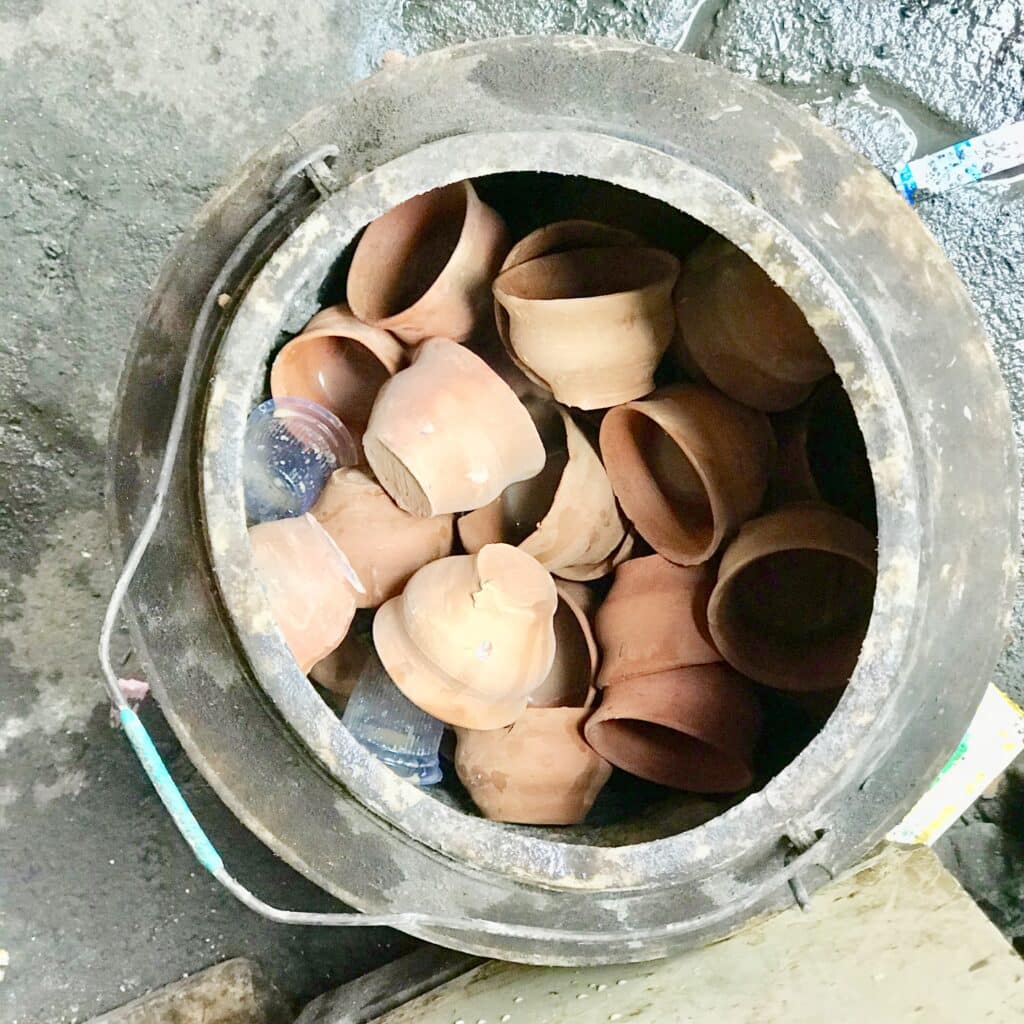
Like most things in the West, we tend to overdo it when it comes to masala chai, drinking it in large cups in diluted form. In India, masala chai is usually drunk as a shot, traditionally served in kulhads (rough, unglazed earthenware cups no larger than your average espresso cup).
Once drunk, the kulhad is thrown away to avoid the risk of ever drinking from a cup that has been used by a lower caste. The clay from the broken cups is reused to make new cups. Nowadays, masala chai is often served in small plastic cups.

In 1870, over 90% of the tea drunk in Britain was produced in China, creating an unwelcome British dependency on China. By the end of the century, due to establishment of British tea gardens in India and Ceylon (Sri Lanka) this had been reduced to just 10%.
Indians had traditionally drunk tea from the indigenous Assam tea plant for its medicinal properties, but not as a beverage to be consumed regularly for sheer pleasure. Later, with the industrialisation of the tea industry by the British, they were able to produce tea in ever greater quantities, working long days from 6am. This led the Indian Tea Association (ITA) to encourage British owned factories, mines and cotton mills to give their Indian workers tea breaks during the working day, thus introducing the role of the tea vendor – the chawallah – into the workplace.
The Association also supported the tea vendors who worked on the railway network that was rapidly spreading across India. The original idea was for tea to be drunk in the British manner, with a splash of milk and a teaspoonful of sugar, but as is so often the case, the Indians had their own ideas and their own recipes. The tea vendors preferred to serve their tea spiced and sweet, diluted with plenty of buffalo milk. This way of drinking tea soon became the drink of choice for other Indians, much to the chagrin of the ITA, who naturally sold less tea when it was prepared this way.
Life is lived on the streets in India and hearing the call “chai, chai” at regular intervals is part of it. The documentary film “Masala Chai” by Marco Holster provides a moving insight into the lives of five different tea vendors from different social backgrounds.
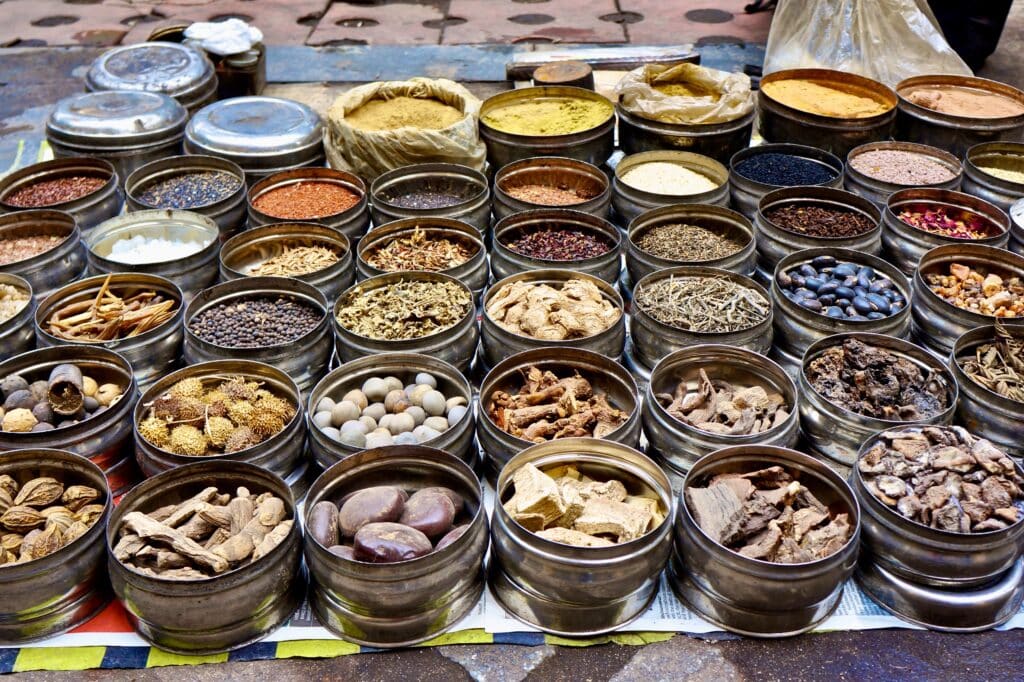
Most Indian masala chai recipes contain cardamom, black pepper, cinnamon, cloves and ginger. These are usually used whole, but grinding them makes for a stronger, spicier chai. The spices are strained out at a later stage.
The key to a nice, creamy masala chai is to use full-fat milk. Using the same amount of milk as tea will make a thicker, milkier tea than diluting the milk – two parts tea to one part milk. Most masala chai recipes outside India use cow’s milk, but for a dairy-free alternative try oat milk or cashew cream.
On the streets of Kolkata, white granulated sugar was the sweetener of choice, but brown sugar, stevia, honey and even maple syrup would work. However tempting it is to reduce the amount of sugar, I would advise against it as it is the sugar that balances all the spices.
If you don’t have time to make chai the traditional way our sweet black tea “Maharaja Chai” and spicy “Star of India Chai” offer a quick and easy alternative. Having said that, while these teas go in the direction of chai masala, there’s nothing to beat making your own chai in the traditional way.
Strange as it may seem, quantities are not important. Just experiment with the amount of spices you use until you find the blend that tastes good to you. Masala chai is usually 2 parts water to 1 part milk, but if you want it creamier, use a 1:1 ratio. As far as the amount of tea is concerned, if you feel that the colour of your masala chai is not dark enough when you get to the boiling stage, add another spoonful of tea leaves.

| Cookie | Duration | Description |
|---|---|---|
| __stripe_mid | 1 year | This cookie is used by our payment provider Stripe to process payments. |
| __stripe_sid | 30 minutes | This cookie is used by our payment provider Stripe to process payments. |
| cookielawinfo-checkbox-analytics | 1 year | The cookies is used to store the user consent for the cookies in the category “Analytics”. |
| cookielawinfo-checkbox-necessary | 1 year | The cookies is used to store the user consent for the cookies in the category “Necessary“. |
| CookieLawInfoConsent | 1 year | This cookie is used to record the default button state of the corresponding category. |
| viewed_cookie_policy | 1 year | The cookie is used to store whether or not user has consented to the use of cookies. |
| woocommerce_cart_hash | session | This cookies is used to determine when cart contents/data changes. |
| woocommerce_items_in_cart | session | This cookie is used to determine when cart contents/data changes. |
| wp_woocommerce_session_* | 2 days | This cookie is used to find the cart data in the database for each customer. |
| Cookie | Duration | Description |
|---|---|---|
| _ga | 2 years | This cookie is used by Google Analytics to calculate visitor, session and campaign data for the sites analytics reports. |
| _ga_* | 2 years | This cookie is used by Google Analytics to calculate visitor, session and campaign data for the sites analytics reports. |

Call us during opening hours on + 49 (0) 711 518 74 006 or email us using the form below. We will get back to you as soon as we can.